Philadelphia continues to grow as a hub for major trade shows, corporate conventions, and brand activations, attracting companies that demand more than basic setups. If you’re planning a 20×20, 30×30, or larger booth, or producing a high-impact experiential environment, your furniture strategy becomes a critical part of your success.
This is where trade show furniture rental in Philadelphia goes beyond tables and chairs—and becomes a tool for engagement, branding, and logistics efficiency.
What Large Exhibitors Actually Need (Beyond Standard Rentals)
Most rental companies focus on small orders. Large exhibitors and agencies require a completely different level of execution.
For larger booths and experiential activations, you need:
- Consistent inventory at scale (not mismatched pieces)
- Modern, brand-aligned furniture that elevates perception
- Flexible layouts for traffic flow and engagement
- Reliable delivery, install, and teardown within tight schedules
- Coordination with show management, union labor, and venue restrictions
This is especially important in venues like the Pennsylvania Convention Center, where logistics, timing, and compliance matter just as much as design.
Designing High-Impact Trade Show Booths in Philadelphia
Furniture plays a major role in how your booth performs. For larger booths, it should be intentional—not an afterthought.
1. Lounge Areas That Drive Engagement
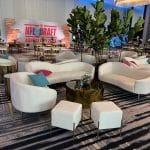
Soft seating setups with sofas, lounge chairs, and coffee tables:
- Encourage longer conversations
- Create a more relaxed, premium environment
- Help differentiate your booth from standard exhibitors
These setups are especially effective for:
- B2B networking
- Sales conversations
- VIP hosting areas
2. Branded Bars and Counters for Interaction
Custom bars and counters are often the centerpiece of experiential booths.
They can be used for:
- Product demonstrations
- Beverage service
- Lead capture stations
- Interactive brand moments
For larger activations, these elements also help anchor the layout and guide attendee flow.

3. Registration and Check-In Zones
For brands hosting scheduled demos, private meetings, or gated experiences, a dedicated check-in area is critical.
Using registration counters or custom desks helps:
- Organize attendee flow
- Capture leads efficiently
- Maintain a polished first impression
4. Display Pedestals and Product Showcases
For product-focused exhibitors, clean and consistent display solutions matter.
Pedestals allow you to:
- Highlight key products
- Control visual hierarchy
- Keep the booth organized and uncluttered

Experiential Activations at Trade Shows
Trade shows are no longer just about static booths. Many brands are investing in experiential environments that create memorable interactions.
This includes:
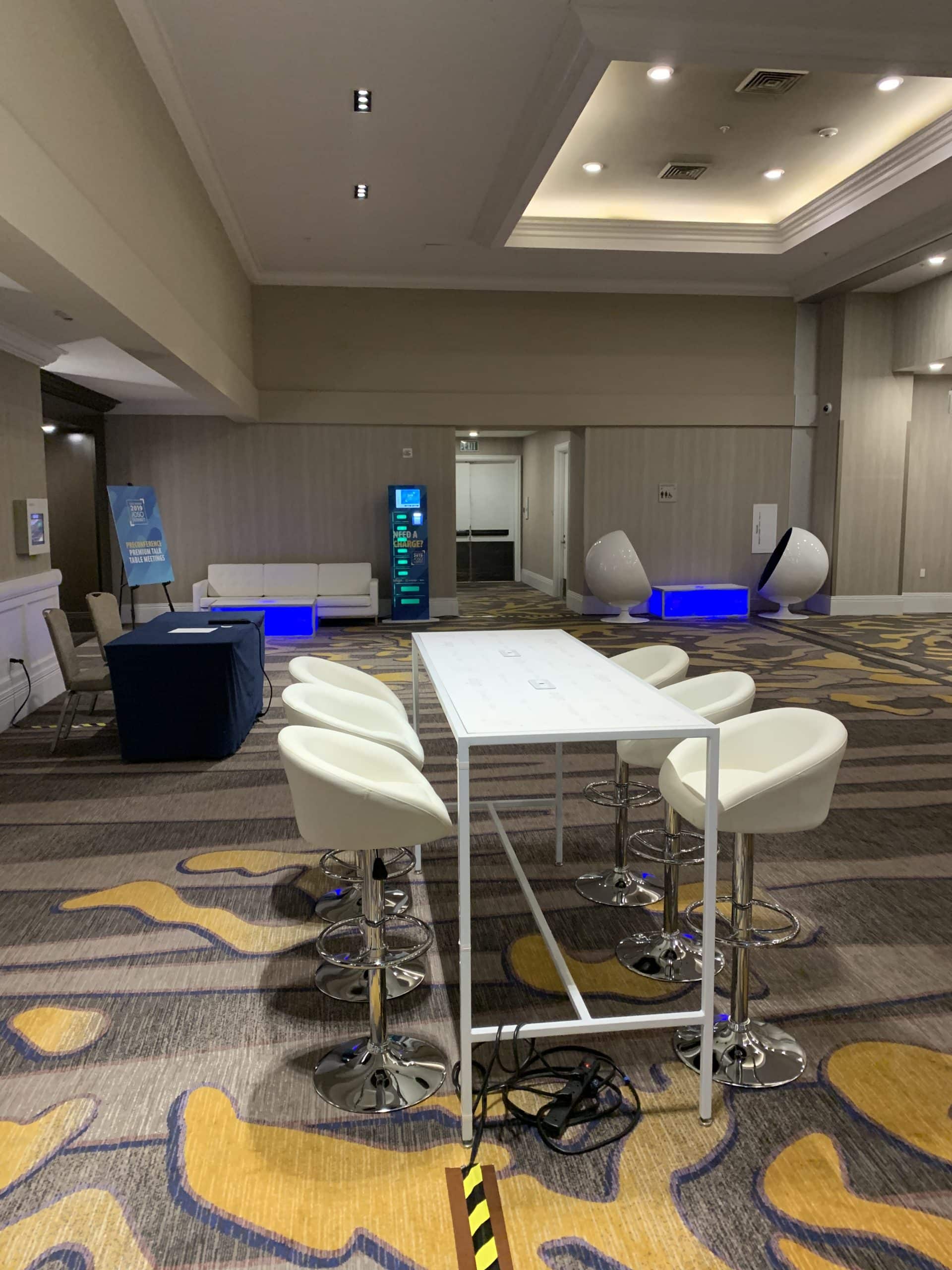
- Immersive brand lounges
- Interactive product demos
- Social media-driven installations
- LED or illuminated furniture for visual impact
The goal is simple:
👉 Create a space people want to enter, stay in, and remember
Furniture plays a foundational role in making these activations functional—not just visually appealing.
Logistics Matter More Than Most People Realize
For large-scale trade show setups in Philadelphia, execution is everything.
Key considerations include:
- Dock scheduling and delivery windows
- Coordination with general contractors
- Union labor requirements
- Tight install and dismantle timelines
- Multi-day event support
Working with a rental partner that understands these logistics can significantly reduce risk and stress—especially when managing large booths or multiple activations.
Why Large Exhibitors Choose Full-Service Rental Partners
When you’re planning a high-value booth or activation, working with multiple vendors can quickly become inefficient and expensive.
A single, experienced rental partner helps:
- Reduce transportation costs (fewer trucks, consolidated delivery)
- Simplify coordination and communication
- Ensure consistency across all furniture elements
- Streamline install and teardown
This becomes even more important for agencies and brands managing multiple events or large-scale productions.
Planning for Scale: What to Consider Early
If you’re planning a large trade show presence in Philadelphia, it’s important to think beyond the basics.
Start by defining:
- Your booth size and layout strategy
- The type of experience you want to create
- Expected traffic volume
- Areas for engagement vs. quick interactions
- Logistics requirements for your specific venue
The earlier this is planned, the smoother your execution will be.
Trade Show Furniture Rental Philadelphia for Large-Scale Events
Not every rental company is built to support large booths and experiential activations.
For brands, agencies, and corporate teams planning high-impact trade show environments in Philadelphia, the right partner should bring:
- Scalable inventory for larger orders
- Experience with corporate events and exhibitions
- Understanding of venue logistics and requirements
- Capability to support experiential design and execution
FAQs: Trade Show Furniture Rental Philadelphia
What size events does trade show furniture rental typically support?
While some companies focus on small orders, many corporate-focused providers specialize in medium to large-scale events, including trade shows, conferences, and brand activations.
Can furniture be customized for brand activations?
Yes. Many experiential setups include custom-built elements, branded counters, or unique layouts designed to match the brand’s identity.
How early should I book furniture for a trade show in Philadelphia?
For larger booths or activations, it’s best to plan several weeks in advance to ensure availability, coordination, and proper logistics planning.
Do rental companies handle delivery and installation?
Full-service providers typically handle delivery, setup, and dismantle—especially for trade shows where timing and coordination are critical.
What types of furniture are most commonly used for large booths?
Lounge seating, bars, registration counters, and display pedestals are among the most common elements used in large trade show environments.
Final Thought
Trade shows in Philadelphia are competitive environments where design, functionality, and execution all matter.
For larger booths and experiential activations, furniture is not just a requirement—it’s part of your strategy.
The right setup can:
- Increase engagement
- Improve brand perception
- Support your team’s goals
- And ultimately drive better results from your event